
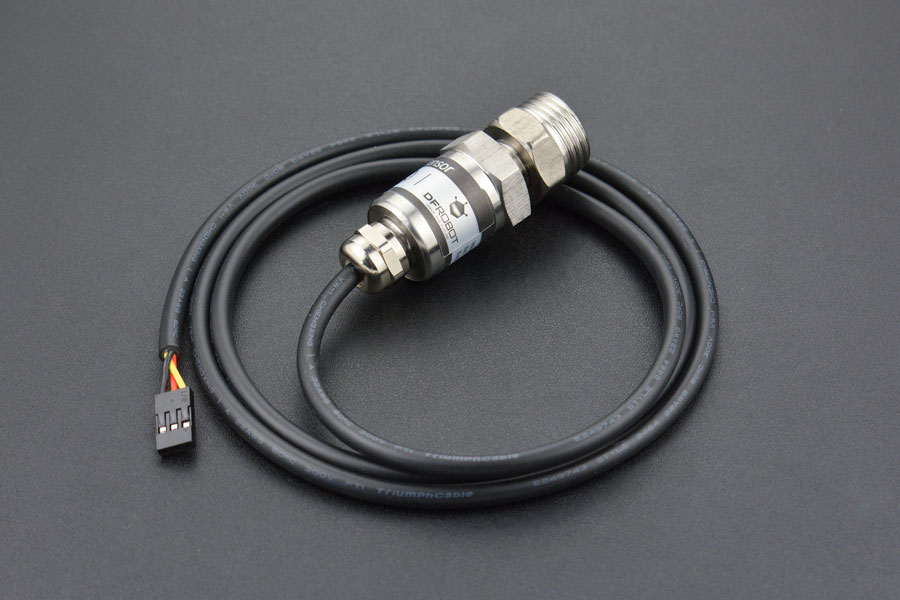
Market Overview:
According to IMARC Group’s latest research publication, “Pressure Sensor Market: Global Industry Trends, Share, Size, Growth, Opportunity and Forecast 2026-2034”, The global pressure sensor market size was valued at USD 19.1 Billion in 2025. Looking forward, IMARC Group estimates the market to reach USD 37.0 Billion by 2034, exhibiting a CAGR of 7.41% during 2026-2034.
This detailed analysis primarily encompasses industry size, business trends, market share, key growth factors, and regional forecasts. The report offers a comprehensive overview and integrates research findings, market assessments, and data from different sources. It also includes pivotal market dynamics like drivers and challenges, while also highlighting growth opportunities, financial insights, technological improvements, emerging trends, and innovations. Besides this, the report provides regional market evaluation, along with a competitive landscape analysis.
How AI is Reshaping the Future of the Pressure Sensor Market
- Predictive Maintenance and Failure Detection: Pressure sensor data is analyzed through AI algorithms which can predict the likelihood of equipment failure․ These models can proactively detect equipment failure by analyzing pressure readings for abnormalities and can be utilized to minimize industrial downtime․ More than half of industrial plants will use AI smart sensors by 2025‚ and an industrial automation OEM saw 18% less downtime across 3‚000 factory lines worldwide․
- Smart Calibration/Automated Temperature Compensation: Smart AI-based systems adjust automatically regardless of temperature or changes in the voltage of the power supply so that regular adjustments are not necessary․ This is particularly important in the case of measuring equipment used in automotive‚ aerospace‚ industrial and other applications where sensor accuracy is vital․
- AI-Enabled Edge Processing for Real-Time Analytics․ The industry is moving toward AI and edge computing that allows data to be processed at or near the point of origin‚ rather than in a data center․ This enables dynamic real-time decision making for applications including autonomous vehicles‚ remote health monitoring‚ and smart factories․
- Industry 4․0 and Smart Factory: The emergence of Industry 4․0 is one of the major drivers of AI-based pressure monitoring systems․ With pressure sensors installed with IIoT‚ cloud networks and autonomous robotics in smart factories‚ manufacturers are given real-time data and analytics to improve processes and increase operational efficiency․
- AI-Driven Miniaturization and Product Innovations: Artificial intelligence and ML advancements have increased the miniaturization of pressure sensors․ MEMS-based designs can be optimized further using AI‚ which is anticipated to improve customization and efficiency in the pressure sensor market․ Edge processing‚ improved sensor integration with microcontrollers‚ and growing demand for context-aware sensing in software-defined vehicles and wearable medical devices are anticipated to drive the industry in the future․
Download a sample PDF of this report: https://www.imarcgroup.com/pressure-sensor-market/requestsample
Key Trends in the Pressure Sensor Market
- Focus on Strong and Smart Products: The automation of industry is growing․ There is a high demand for pressure sensors with digital interfaces‚ which are strong‚ suitable for harsh environments‚ and can be used for a wide pressure range․ Digital communication interfaces such as I/O-Link and IIoT connectivity are also becoming increasingly important․ Another more recent example of industrial pressure switches is the SCPSDI pressure switch from Parker Hannifin launched in 2025․ This strong pressure switch has a rotatable housing‚ stainless steel components and is seal-less․ Designed for permanent industrial installation‚ the SCPSDI is available with a wide pressure measuring range of 4 to 600 bar․
- Building Automation and Energy Management: HVAC and energy efficiency monitoring rely on fast‚ precise sensors in today's commercial buildings and homes․ The global pressure sensor market size 2024 reflects growth from automotive, healthcare, and industrial sectors, driven by automation and IoT adoption. Pressure sensors interface with smart BMS to provide real-time analysis‚ predictive maintenance‚ and regulatory compliance in the spaces they serve․ In 2025‚ the AcuPRE differential pressure sensor was introduced as part of Accuenergy's next generation of BAS sensors to provide high accuracy‚ fast response‚ and long-term stability to maximize HVAC operating efficiency under changing environmental requirements․
- More Advanced Energy Storage: The demand for high performance energy storage systems for electric vehicles‚ renewable energy and portable electronic devices creates a new application for ultra-thin‚ flexible pressure sensors․ By measuring pressure between cells in a battery stack in real-time‚ engineers can ensure a more uniform and safe operating pressure‚ prolonging the life of energy storage systems․ In 2024‚ Tekscan announced its Model 7800 pressure mapping sensor for battery research and manufacturing‚ which measures the space between the battery cell and module to optimize design‚ safety‚ and performance․
- Wireless and IoT-enabled sensing: Driven by the rise in IoT devices‚ wireless pressure sensors based on Bluetooth Low Energy (BLE) and LoRaWAN technology are increasing in adoption‚ including enabling the removal of hard-wiring and enabling control of processes in tight and hostile environments․ In 2024‚ TE Connectivity also expanded the wireless IoT pressure sensor portfolio with the addition of the 65xxN (BLE based) and the 69xxN (LoRaWAN based) short and long range sensing solution as the industry shifts towards connected and remotely manageable sensing solutions․
- Automotive Electrification and Advanced Safety Systems: The global automotive electrification trend‚ including more battery electric vehicles and hybrids in the fleet‚ contributes to new demand for pressure sensors in battery management systems‚ regenerative braking systems and thermal cooling circuits․ Tire pressure monitoring systems (TPMS) remain mandatory in most major markets․ The next-generation tire pressure sensor with Bluetooth was introduced by Bosch in June 2025 under the name SMP290‚ which communicates directly with the smartphone and has a very low energy consumption principle‚ resulting in a long battery life․
Growth Factors in the Pressure Sensor Market
- Industry Automation Boom: One of the most important factors driving the growth of pressure sensors is the global trend of smart factories and Industry 4․0․ Robotics‚ hydraulics‚ and machinery all use pressure sensors for accuracy‚ safety‚ and efficiency․ These sensors will also play a key role in the further application of predictive maintenance to optimize production‚ reduce downtime and improve productivity․
- Increased automotive safety and efficiency requirements: Automotive manufacturers are increasingly relying on advanced technology for engine management‚ emission control and vehicle monitoring systems to meet safety and efficiency requirements‚ especially for electric vehicles․ The US market for EVs alone is projected to reach 26․4 million vehicles by 2030 (10% of all US vehicles)․ This will drive increased demand for pressure sensors for battery systems‚ braking and HVAC control․ The largest application sector at present is automotive‚ which accounts for 30% of the market․
- Healthcare Industry and Medical Devices: The incorporation of pressure sensors in patient monitors‚ respiratory equipment‚ and diagnostic equipment is growing․ The demand is driven by the increasing popularity of remote monitoring‚ the use of wearable medical devices‚ and advancements in telemedicine․ They are valued for their accuracy and reliability‚ and are used in modern medical instruments․
- Increasing adoption of IoT and consumer electronics: Pressure sensors are widely used in smartphones‚ smartwatches‚ tablets‚ and smart home devices․ For instance‚ the US logistics automation market is projected to reach USD 38․2 Billion by 2033‚ presenting the increasing use of pressure sensors in consumer and industrial applications‚ fueled by the growth of the Internet of Things (IoT)․
- Oil‚ gas and energy infrastructure investment: Process monitoring and control of the energy production process is one of the key applications of pressure sensors in oil and gas‚ especially in the Middle East and Africa․ In Europe‚ total wind power installed capacity was 285GW in 2024‚ following 16․4GW of installations․ Between 2025 and 2030‚ 187 GW of capacity is expected in Europe that will require precision in pressure measurement in renewable energy infrastructure․
Leading Companies Operating in the Global Pressure Sensor Industry:
- ABB Ltd
- All Sensors Corporation (Amphenol)
- Bosch Sensortec GmbH (Robert Bosch GmbH)
- Endress+Hauser Group Services AG
- Honeywell International Inc.
- Infineon Technologies AG
- Kistler Group (Kistler Holding AG)
- NXP Semiconductors N.V.
- Rockwell Automation Inc.
- Sensata Technologies Inc.
- Siemens AG
- Texas Instruments Incorporated
Pressure Sensor Market Report Segmentation:
Breakup By Product:
- Absolute Pressure Sensors
- Differential Pressure Sensors
- Gauge Pressure Sensors
Absolute pressure sensors represent the largest segment, holding a market share 45%, because they provide highly accurate and stable readings based on a perfect vacuum reference.
Breakup By Type:
- Wired
- Wireless
Wired dominates the market holding 82%, because of its established dependability, steady performance, and capacity to provide reliable results across various operating conditions.
Breakup By Technology:
- Piezoresistive
- Electromagnetic
- Capacitive
- Resonant Solid-State
- Optical
- Others
Piezoresistive holds the biggest market share with 27%, owing to its remarkable sensitivity, extensive measurement ranges, and excellent thermal stability, making it ideal for intricate industrial and automotive uses.
Breakup By Application:
- Automotive
- Oil and Gas
- Electronics
- Medical
- Industrial
- Others
Automotive represents the largest segment, accounting for 30% market share, owing to the industry's growing dependence on cutting-edge technologies to improve safety, efficiency, and performance.
Breakup By Region:
- North America (United States, Canada)
- Asia Pacific (China, Japan, India, South Korea, Australia, Indonesia, Others)
- Europe (Germany, France, United Kingdom, Italy, Spain, Russia, Others)
- Latin America (Brazil, Mexico, Others)
- Middle East and Africa
Asia-Pacific leads the market in 2025 with a share of 38%, because of its robust manufacturing environment, quick technology adoption, and the growing use in the industrial sector.
Recent News and Developments in the Pressure Sensor Market
- In June 2025‚ Bosch launched the SMP290‚ a Bluetooth-enabled tyre pressure monitoring system․ The standardized Bluetooth interface allows the system to communicate directly with smartphones‚ while the ultra-low energy consumption allows it to operate for extended periods․ The product is considered to be the reference TPMS solution for the next generation․
- In June 2025‚ Crane Company announced plans to acquire Precision Sensors & Instrumentation‚ a leading manufacturer of sensor technologies for pressure sensors‚ a move that will improve its competitive position in all its pressure sensor applications․
- May 2025: IFM presents PI series‚ a new generation of high-resolution pressure sensors developed specifically for hygienic applications: the new sensors offer top precision and reliability for the most demanding applications within the food and beverage manufacturing industry․
- April 2025: China-headquartered pressure sensor technologies manufacturer Trensor will build its first overseas manufacturing facility in Malaysia and is expected to open in 2026‚ marking another milestone in its overseas expansion and the geographical diversification of the industry․
- The new 4012A absolute pressure sensor from Kistler‚ announced in April 2025‚ is specially designed for measurement of hydrogen pressure․ The sensor for H2 applications has been tested and is qualified for high Hydrogen resistance‚ and this is currently a fast growing green hydrogen and fuel cell applications market․
- In February 2025‚ Honeywell International Inc․ announced a collaboration with Lockheed Martin subsidiary ForwardEdge ASIC to design and fabricate radiation-hardened microelectronic components for space-based applications․ Combining Honeywell's foundry strength in RF‚ analog and power with design capabilities of ForwardEdge ASIC will accelerate the development of high reliability ASICs and electronic memory products for harsh environments․
- ABB launched the P-Series of pressure transmitters at the China International Import Expo (CIIE) in November 2024․ The P-100‚ P-300 and high precision P-500 series are designed to enable process control and energy savings in industrial digitalization with built-in Bluetooth‚ Radio-frequency identification (RFID) and next-generation human machine interface (HMI) digital technology․
Note: If you require specific details, data, or insights that are not currently included in the scope of this report, we are happy to accommodate your request. As part of our customization service, we will gather and provide the additional information you need, tailored to your specific requirements. Please let us know your exact needs, and we will ensure the report is updated accordingly to meet your expectations.
About Us:
IMARC Group is a global management consulting firm that helps the world's most ambitious changemakers to create a lasting impact. The company provides a comprehensive suite of market entry and expansion services. IMARC offerings include thorough market assessment, feasibility studies, company incorporation assistance, factory setup support, regulatory approvals and licensing navigation, branding, marketing and sales strategies, competitive landscape and benchmarking analyses, pricing and cost research, and procurement research.
Contact Us:
IMARC Group
134 N 4th St. Brooklyn, NY 11249, USA
Email: [email protected]
Tel No: (D) +91 120 433 0800
United States: +1-201-971-6302